
Signal and Noise
BIG DATA AND VERIFIABLE RESULTS

MEASURE THE PERFORMANCE
Data Collection and Analysis
AirGlide AI analyzes environmental and ship operating data to verify installed operational energy savings resulting from the AirGlide AI ALDR.
A present challenge for the ship owner or operator has been understanding the actual contribution of the ALDR system once installed.
To measure the performance contribution, data must first be collected. In collecting this data, the two primary domains of data collection are found to be very noisy and complicated.
BIG DATA: VERIFIABLE RESULTS
External Environmental Noise
External environmental noise includes factors such as:
Wind direction and velocity
Sea state, currents, and tidal flow
Ship heading changes
Ambient temperature and humidity
Atmospheric pressure
Hull and propeller fouling
Hull coating roughness
Impact of diver cleaning maintenance

BIG DATA: VERIFIABLE RESULTS
Internal Ship Noise
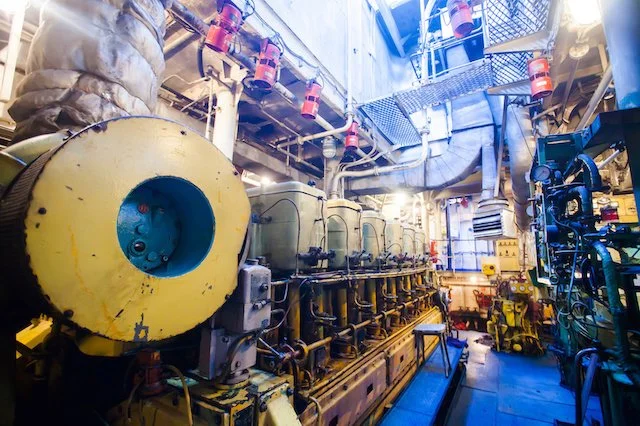
Internal ship noise includes on-board factors like:
Engine and turbocharger condition and operating range
Parasitic loading
Fuel transfer systems
Auxiliary fuel consumption
Bearing and shaft sealing status
Fuel quality and type (ECA operation)
Scrubber or exhaust waste heat energy recovery engine back pressure


Measure the Performance
AirGlide AI researchers, engineers, and programmers are leading the implementation of big data to provide verifiable results to owners and operators
Big Data is the New Analysis Paradigm
The term big data has become an industry cliché and the relevant meaning is often lost. Unique and significant differences exist in analyzing big data compared to traditional analysis of small data. The traditional statistical analysis revolved around statistical significance and typically used the smaller sample data set scaled to represent a larger data system. Today, in big data with advanced computing and storage power, we have access to either all, or the majority, of the data that represents the entire system. Statistical significance is no longer so relevant.
The data analysis is significantly different and becomes more a filtering or searching process rather than a modeling or scaling process. Big data analysis is unique from historic data analysis in that new features become predominant, including heterogeneity, noise, spurious correlation, and incidental endogeneity versus exogeneity assumption.
Heterogeneity | Small data typically emanated from a single or few sources and the data was homogenous or relating to one population. In small data, an outlier is disregarded or ignored. In big data, the number of different data sources provides the opportunity to consider sub-populations.
Noise | The massive amount of data in big data can lead to data noise that can mask important and relevant correlations.
Spurious correlation | Alternatively, again due to the massive amount of data, incorrect correlations can be found based on data sets that occur not because they correlate but rather due only to the quantity of occurrences.
Incidental endogeneity versus exogeneity assumption | Many of the statistical tools available in prior analysis with small data are not available in big data analysis due to the small data sets being able to correlate to a variable external to the data set and in big data the correlation is likely to a variable inside the data set.
RESEARCH AND DEVELOPMENT
Statistical Analysis
This wide variety of exogenous data creates an extremely noisy data-collection environment. In collecting data to measure the actual reduction in ship drag and fuel consumption, statistical analysis and synthesis of the copious amounts of data is an area of intense research and development today.
AirGlide AI, with its network of world-class Ph.D. researchers, engineers, and programmers, is a leader in the maritime industry in developing the tools that provide this answer to you in a timely manner with accuracy and precision.


THE COMPLETE PICTURE
We Supply World-Class Air Layer Drag Reduction Systems (ALDR) to Ships of All Types and Sizes
Computational Fluid Dynamics
AirGlide AI can conduct CFD analysis for every ship type using cutting-edge CFD computers and software and in-house CFD experts.
Big Data
AirGlide AI uses its proprietary automation software to analyze ship data to optimize performance and confirm actual fuel savings achieved through its ALDR technology.
ALDR IP and Patents
Many of our proprietary technologies have been thoroughly tested, validated, and are now protected globally under multiple patents.
Testing Facilities
AirGlide AI has devoted capital and resources to design and build test platforms dedicated to fine-tune performance and efficiencies.
Installation
Our engineers and project managers have the ability to take an AirGlide AI ALDR from early concept design to completed installation.
Transforming Legacy ALS to ALDR
AirGlide AI has developed hardware and software leveraging true artificial intelligence to transform 20th century legacy ALS to 21st century ALDR systems.